

Jonathan Ryan Ramirez

Eric Walter Nobel

Jacqueline Sisco

Elijah Bernal

Devin Farias

Samuel Barron

Marco Vasquez
What is a Cold Case? The Reality and the Emotional Toll on Families
Understanding cold cases and the toll they take on families.
Share this article:
When an investigation into a major crime begins, it brings a whirlwind of activity. Investigators swarm the scene, tips pour into call centers, and the community rallies around the victim’s family. As weeks turn into months, and months into years, that initial momentum slows down.
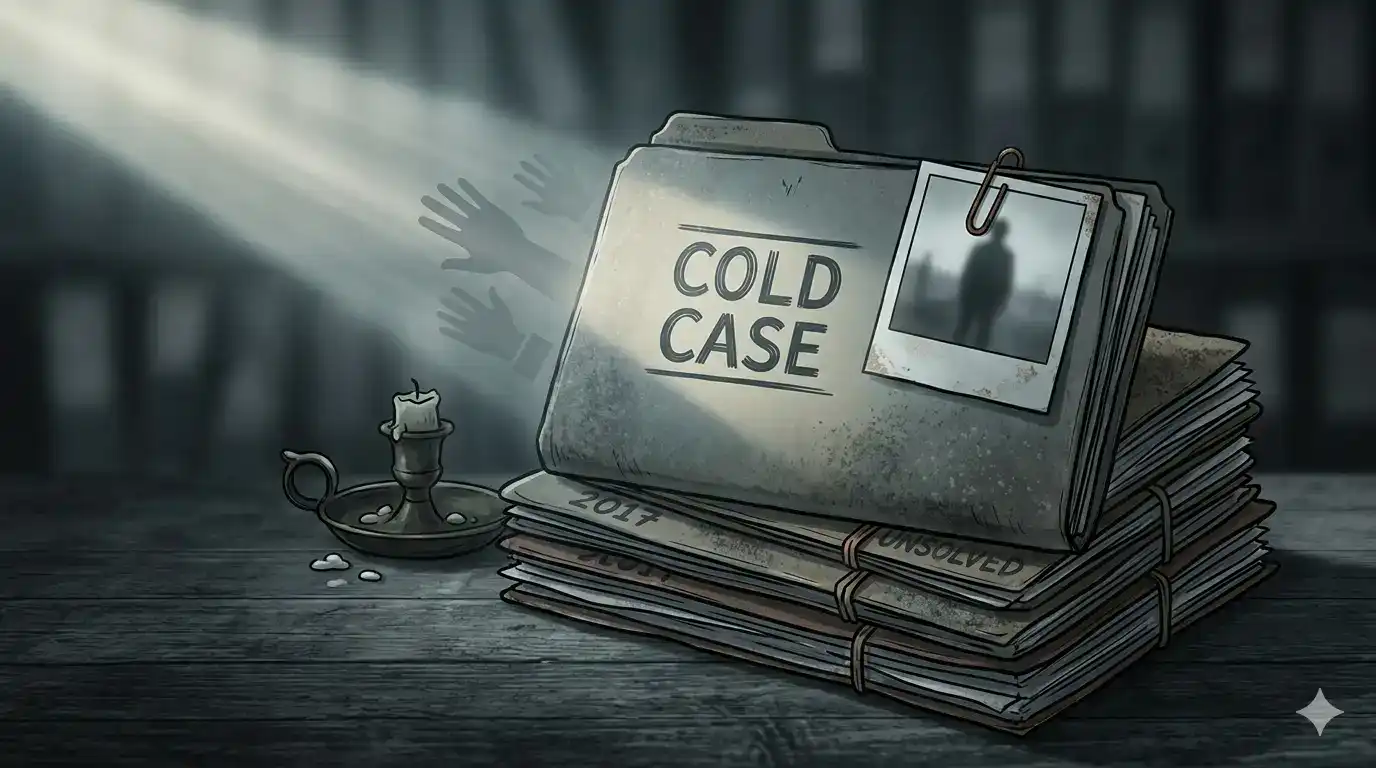
Eventually, a case may be designated as a “cold case”—a term many people recognize from television, but one that carries a deeply painful reality in the real world.
What Makes a Case Go “Cold”?
There is a common misconception that a case automatically becomes a cold case after a strict, predetermined timeline, such as 5 or 10 years. In reality, how a case is categorized depends entirely on the flow of information.
In San Antonio, local law enforcement move investigations to cold case status only when they stop receiving new, actionable information about the case. Because of this, there is no hard and fast rule on time. While 5 to 10 years is a general timeframe for when many unresolved cases naturally hit this plateau, a case could technically be designated as cold sooner if all leads are completely exhausted, or it could stay active much longer if tips keep coming in.
A cold case is not a closed case; it is simply an active investigation that has run out of pieces to the puzzle.
Why the “Cold Case” Status is Heartbreaking for Families
For the families of victims, the day a case officially goes cold is an incredibly disheartening milestone. It marks a painful shift in their journey for justice for several distinct reasons:
- A Feeling of Being Forgotten
When a case goes cold, the daily communication with detectives naturally tapers off. For families living through an absolute nightmare, this silence can feel like the system has given up on their loved one, leaving them to carry the memory alone. - The Loss of Community Momentum
Public attention is a powerful tool in solving crimes. As years pass, the media stops running stories, public interest fades, and the collective urgency to find answers disappears. Watching the world move on while your life is frozen in time is an isolating experience. - Compounded Ambiguous Grief
Without answers or a resolution, families are trapped in a state of ambiguous grief. They cannot find closure because the “whys” and “whos” remain entirely unanswered. Every milestone, holiday, and anniversary is overshadowed by the lack of justice. - The Fear of Fading Memories
As time stretches into a decade or more, families face the terrifying reality that witnesses move away, memories fade, or individuals who hold critical information may pass away, taking the truth with them.
Hope is Never Completely Lost
While the cold case designation is a heavy burden for families to bear, it is important to remember that cold does not mean forgotten.
History has proven time and again that a single new phone call, an advanced DNA testing breakthrough, or a changing relationship can instantly reignite a stagnant investigation. People who were once afraid to speak out find their courage years later, and old evidence can reveal new secrets under modern technology.
📞 You Could Be the Missing Piece
If you have any information regarding an unsolved case in our community—no matter how small or insignificant it may seem to you—please contact Crime Stoppers of San Antonio.
Your tip is completely anonymous, and it could be the exact piece of new information investigators need to move a case off the cold case list and bring long-awaited peace to a grieving family.
100% Donor-Funded Rewards.
0% Tax Dollars.
Your Donations Power the Work to Solve Crime & Protect Society.
Insert paragraph.